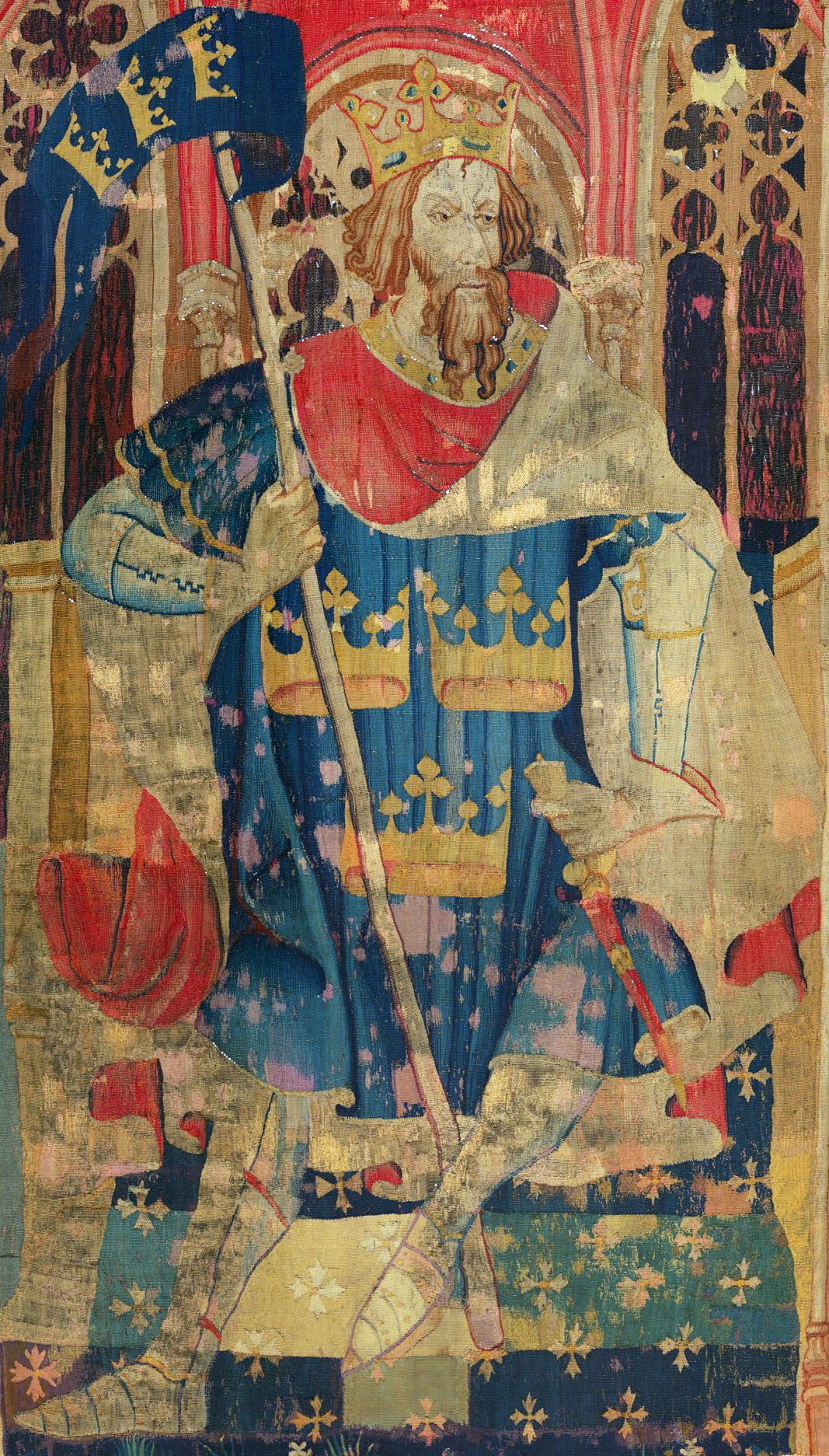
(Page a little broken, needs spell checking)
THE Servant of all time. Often imitated, but never duplicated. Ever since the original Fate/Stay Night release all the way back in 2004, Saber has made her mark on fans of Fate, Visual Novels, and Animanga worldwide and remains the series mascot to this day, spawning a deluge of clones - both in universe and out and both figuratively and literally - it seems that despite all this, there's no Servant quite like Saber. Something about this one very, very hungry British (Welsh? Cornish? Whatever you call someone from Devon? IDK) Knight has endeared her in the eyes of almost all who've so much as glampsed at her? Is it because of her dedication to her ideals and her nation? Her nobility? The deep meaning of the character or just because she looks cute?
To be honest, Saber is such an icon that it's difficult really to describe her as anything but Saber - she's kind of like Superman or Goku in that way.
This page serves a character shrine for our great King of Knights.
Depending on if you count Arthur, or Proto-Saber, who is a different person based off the same mythological source and created by Nasu, as the same person as Saber proper, she holds the honour, alongside Ayaka Sajyou, Proto-Cu, Proto-Gilgamesh, and the other Fate/Skipper characters as being one of Nasu's first created characters, even predating the Mahoyo cast.
If we claim that too much was changed between Arthur and Artoria for them to count as the same character, then she becomes about 7-8 years younger than Aoko and co depending on when development for Fate/Stay Night proper began.
This makes her a sort of Schrödinger's old woman, like this image:
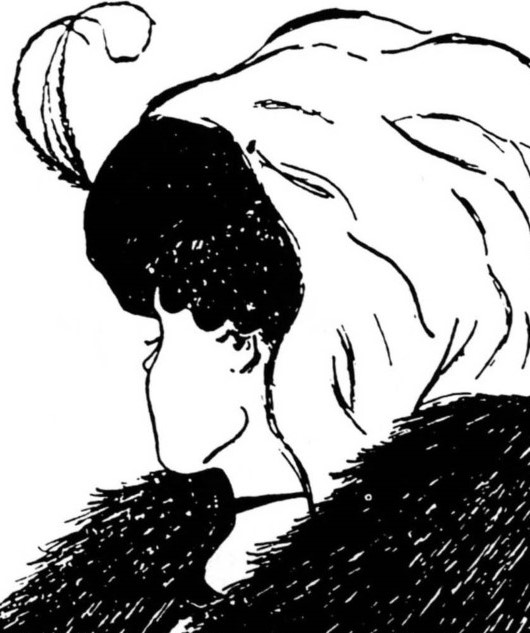
She would be, as of the initial writing of this in 2025 either 35 (going of the writing of Fate Skipper in 1990) or 21 (going off the 2004 release of Fate/Stay Night).
...So not actualy all that different in terms of age.
As the story goes, Nasu wrote a book about various heroes fighting each for the Holy Grail called 'Fate Skipper' because he liked Samurai Resurrection and wanted to do something similar but with heroes around the world instead of just Japan. He chose King Arthur as one of them, no idea why, but considering Saber would have been one of the MCs, maybe Nasu is really into British mythology. He started this in 1990 but only got about as far as Saber vs Kojiro - so I'm assuming the stuff that takes place later (based on when the events occur in relation to each other in Fate/Stay Night) like Saber being corrupted and Ayaka and Lancer having to team up against him and Gilgamesh showing up - and Manaka's likely appearance as the final boss was only drafted down and not fully written.
That or Kojiro was going to be the final boss. Maybe that's where Saber dueling Kojiro at the end of UBW came from.
Some day later I'd like to (once I've read the Silver Sky books) figure out what in Fate/Prototype is changed or rearranged from Fate Skipper and try and see what DNA of Fate Skipper characters and events remains in those of Fate/Stay Night - like Illya likely being based off Manaka and The Shirou/Rin/Lancer team-up while Saber is kidnapped by Caster likely coming from the Lancer/Ayaka team up to deal with Sancraid's Berserker and corrupted Saber. I wonder if Gilgamesh killed Sancraid like Archer does Caster immediately after that, because he apparently also beats Berserker.
Proto/Skipper Saber was apparenly the ideal hero for the 1990s. English language pop-culture got all grim back then (as it seems alternate between optimisitic and pessmistic every 10 years) but I have no idea if that also applies to Japan's. They had an economic collapse, and I'd be pretty down in the dumps if that happened to me (Of course, my country of the UK would never ever economically collapse, right? This bit in brackets has been added to make the joke more obvious). Nasu claimed that Archer inherited his nihilistic statements but also mentions him being mature with a sense of justice and 'a pleasant hero', so maybe he was sort of a cross between a Superman type paragon and Archer in terms of personality? He looks quite grim in the Character Material art but those might just be drawings of him during emotional moments or something.
I really need to source all this, huh?
Proper-Saber seems to have inerhetied the 'calm' they mentioned as well as his goals and sense of chivalry, but I wouldn't call the stoic and often emotionless-seeming Saber of the first couple of nights of Fate/Stay Night a 'pleasant hero'. Its possible he was originally more approachable than Saber ended up being.
There's always the actual appearences of Proto-Saber to gain insight into his original personality, but in the years between the drafting of Fate Skipper and the Prototype characters' first appearence in Carnival Phantasm, its possible that like how Theseus was swapped out for Perseus, that proto-Saber's personality changed considerably.
As one last piece of trivia for Proto-Saber, for some reason, his class is written (in English) as 'Archetype Saver' - Buddha's class in Extra in character material. Considering the Beast with 7 heads is the Aŋra Mainiiu of Fate/Prototype, it's possible he was going to reclass to a more "holy" Servant type to take him down.
Or, like Altria, it's a misromanisation, lol.
Regardless, after the success of Tsukihime, Type Moon decided to bring back Fate Skipper, one name and gender change later, we get Fate/Stay Night.
So, that is the history of Saber specifically, but...
This is not a peer-reviewed, properly sourced article, but just my own knowledge and opinion with the sources used without page numbers.
The name Arthur is probably a Brythonic-isation of the Roman name Artorious, although it could also derive from 'arth', meaning bear in Brythonic (although this is likely a later onomastic explanation).
It is first applied to a person resembling the legendary king in the 9th century pseudo-history of Britain, Historia Brittonium (History of the Britons), commonly attributed to the monk Nennius. The text is more of a general history of Britain, although one highly focused on the Roman and Post-Roman rule - skipping from Brutus the Trojan founding the island to Caesar's invasion - and Arthur's role is minimal and unimportant to the general narrative - basically serving to give the Saxons twelve losses before they win and takeover most of the island in the final paragraph before the genealogies.
Here, Arthur is a Dux Bellorum (meaning Battle Leader - so likely meaning head of the military) of the British (as in the ancestors of the modern day Welsh, Cornish and Bretons) against the Saxons (ancestors of the modern day English) in twelve decisive battles, culiminating in the battle of Badon Hill (probably modern day Bath). This might seem historically plausible despite no evidence showing these battles were fought in this order, by the same people or were all British victories. However, more fantastical material is added following this in the Marvels of Britain section where we learn: Arthur aslo had a dog named Cabal (meaning horse) that left a footprint on a stone while hunting the boar Troynt with Arthur that magically returns to its mound when removed, and a son named Amr he killed whose grave magically changes sizes. So we are off to an already highly legendary source. Nennius might have created Arthur himself, but the Cabal and Amr stories suggest a pre-existing hero he is trying to historicise, at least to me.
More proof of Arthur being a legendary figure comes in the lack of any material evidence, the other legendary material covered in Nennius' history such as Britain's Trojan Founders and the dragons under the Dinas Emrys, the lack of mention by the earlier writers such as the contemporary to the Saxon invaison monk and polemicist Gildas and the Anglo-Saxon monk and historian Bede in their coverage of the Saxon invasion and the twelve battles themselves being a mess of real and legendary battles, all fought at radically different dates. It is my opinion that the genesis of Arthur is in how Gildas in his De Excidio et Conquestu Britanniae (On the Ruin and Conquest of Britain) does not give a name to the military leader at the battle of Badon Hill and Nennius felt he needed one for such an important battle.
Here Arthur travels all over the place in his battles, but the legendary material - Cabal and Amr - associate Arthur with Buelt (somewhere in modern day Powys, possibly Builth Wells) and Ercing (modern day Herefordshire, although this one I am less sure of) respectively. This would place Arthur's stomping ground as around what is now the southeast-end of Wales to the midwest of England.
(Read Historia Brittonium here. For De Excidio et Conquestu Britanniae, see here - keep in note it translates Mons Badnonicus as Bath-hill - believing that Badon=Bath, an identification other authors are not sure of.)Following Nennius, the next surviving sources for Arthur come in old Welsh poems, often only referenced obliquely in comparison to another mighty warrior. I am not too familiar with the dating of these poems, but folowing the order of "Arthur in Early Welsh Poetry", Arthur seems to have either absorbed other existing heroes or had multiple new ones (likely both) added to flesh out his military forces, with multiple recongisable Arthurian characters like Bedwyr and Gwalchmai son of Gwyar(Gawain) appearing alongside Arthur in the Stanzas of the Graves (date of composition unknown).
By the time of the writing of Pa Gur (Title translating to What Man) in around 1100, Arthur's warband clearly have many stories of their own, in particular Cai, as Arthur introduces the names and exploits of his warriors to the porter Glewlwyd Gafaelfawr so that they can be let in to a hall. Cai is seemingly Arthur's best man here, and the poem breaks off while Arthur goes over his battle with Cath Palug (Palug's Cat) in Anglessy but the other recognisable member of the future knights of the round table - Bedwyr (here mentioned to battle men with dog-heads near Tryfrwyd) makes an appearance too, alongside otherwise unknown figures like Mabon son of Mellt, Anwas the Winged and Llwch the Windy-Handed (the defenders of Edinburgh) and figures from welsh mythology such as Mabon son of Modron (here a servant of Uther Pendragon, although Uther himself is not claimed to be King of Britain or Arthur's father, let alone dead, here) and Manawydan son of Llŷr (from the Third Branch of the Mabinogi). A nephew of Arthur's (possibly Gwalchmai, his brothers Gwalhafed and Medrawd, or Eliwlod) is also potentially mentioned. Here, amongst Arthur's connection to figures from wider Welsh Mythology, we can see Arthur already been supplanted by his men (here Cai) as the main hero of his own stories.
Again, Arthur travels all over the place in this poem, but of note is that the fall of Celli is mentioned. Celli Wig (meaning Forest Grove) in Cornwall is mentioned as Arthur's court in later sources like How Culhwch won Olwen and the Dream of Rhonabwy, both found in the Mabinogion. If this is the same location, as Celli by itself just means Grove, it would indicate that Arthur was imagined in most early storytellers and audiences as Cornish or at least living in Cornwall or that Celli Wig was moved at some point to Cornwall in the imagination of writers.
Cornish connections can also be found in Arthur's appearences in Welsh poems about the legendary Dumnonian (modern day Devon and Cornwall) King Geraint son of Erbin.
How Culhwch won Olwen, where Arthur, now the Chief King of the Islands of Britain, helps his cousin Culhwch win the hand of Olwen, the daughter of the giant Ysbaddaden, is found in the anthology of Welsh mythological texts called the Mabinogion and is the oldest known complete story about Arthur and dates to (at the latest) the 11th century.
One of the many tasks needed to win Olwen's hand is to hunt the boar Twrch Trwyth, which Arthur does with the help of his dog Cafall, suggesting that whoever wrote the story was either borrowing of Nennius or they were both using the same pre-existing legend about Arthur.
Even a story as old as this also suggests the existence of a long tradition of Arthur stories, with him having a comically high number (225) of named members of his court, including some joke names there to pad the numbers but also recognisable heroes like Bedwyr, Gwalchmai, and Cai. Cai here is also protrayed as Arthur's best man, with a retinue of supernatural powers such as the ability to grow giant, go days without eater and being so hot he can keep whatever he holds dry in heavy rain. Arthur is married to Gwenhwyfar by now. Also here is Taliesin, a historical Bard of the kingdom of Rheged who possibly composed a poem about Arthur called "The Spoils of Annwfn" (as in the authorship is disputed). The final court member of note is Osla Gyllellfawr, (meaning Osla big knife) who is protrayed in the much later Dream of Rhonabwy as the Saxon leader at Badon Hill. This could suggest the Arthur of this tale has also succesfully subjugated the Saxons and made them pay homage to him, that Olsa is hostage in Arthur's court or simply that the author of the Dream of Rhonabwy chose a random pre-existing Arthurian figure to be the Saxon leader at Badon Hill. The court list of Arthur was clearly updated as the story was re-recorded and re-recorded, with its references to the Welsh Triads (a list of groupings of threes - as in "The three unfortunate slaps of the Island of Britain", "The three most well-endowed men at Arthur's court", etc.), Arthur's death at Camlan and many famous existing heroes like the aforementioned Taliesin.
Taliesin's presence in Welsh mythology about Arthur generally is in keeping with Arthur being around in the early to mid sixth century, making the presence of Geraint anachronistic.
Arthur is also imagined as Cornish in the poem known as The Dialogue of Arthur and The Eagle, where he talks to the ghost of his nephew Eliwlod, which has taken the form of an eagle. This poem is notable for being an early example of something now common in historical fiction about Arthur - Arthur being pagan, or at least non-Christian, as Eliwlod's ghost has to instruct him on religious matters like heaven not being a physical place Arthur can just raid and rescue Eliwlod from. When pagan/non-Christian Arthur shows up in the various Saint's Lives, biographies of British saints, he is typically protrayed far more evilly.
Overall, while everything covered so far is Welsh in origin, the fact that so many of these stories are set in Cornwall is notable, it could suggest that the Cornish told stories of Arthur being their legendary king, that Arthur was a pan-Brythonic myth, or that the Welsh saw Cornwall - a land whose people were the same race as their's but was made distant and isolated from them by English territory between them - as a location distant enough to be where giants, witches and other otherwordly beings could still live but close enough in heritage to be an acceptable home for heroic figures. Additionally, while as far as I am aware, no direct sources showcase Breton stories about Arthur as early as Welsh ones, their traditions about Arthur seemingly influenced Norman and French authors like Wace and Chierten de Trojes (with Wace claiming the famous Round Table was a piece of Breton folklore) and Marie de France's translations of Breton Lais include Arthurian stories. Some indirect evidence of early Cornish or Breton traditions may come in the name Medrawd (Mordred) potentially being a loan to Welsh from Cornish or Breton (see Arthur in Early Welsh Poetry).

The Dialogue of Gwenhwyfar and Melwas is the name given to a poem that exists in two fragments, in them Gwenhwyfar mocks her abducter Melwas - the King of the Summer Country (Glastonbury) - as being either young or short and for being weak compared to Cai. A third speaker (probably Cai) then shows up to attack Melwas. This story, the abduction of Gwenhwyfar, shows up in the Vita Gildae (Life of Gildas) by Caradoc of Llancarfan, where Gildas, the monk and author of Historia Brittonium, negotiates succesfuly for Gwenhwyfar to be released (interestingly, it explains away Gildas never mentioning Arthur as due Gildas hating Arthur for killing his brother) and on the north portal of the Modena Cathedral in Italy, which also includes the more obscure Isdernus (Edern) trying to enter the towers where Mardoc (Melwas) and Winogee (Gwenhwyfar) are, showing Arthur made it to continential Europe not only by latin texts like Nennius and the to be discussed Geoffrey of Monmouth (as he appears in neither) but through other, potentially Welsh or Breton, sources).
Also, the story of Tristan/Drystan, a Cornish Prince and the nephew (potentially the historical son) of King Margh of Cornwall and his love triangle between him, the character typically anglicised as Iseult or Isold and Margh have their beginnings in Brythonic mythology (most likely in or around Cornwall, considering the historical existence of Margh as King of Cornall and potentially Drystan as his son, although I know of no historical Iseult). They would later cross-over into the realm of Arthuriana.
The final welsh texts of note are the Welsh Triads, mentioned above. Different manuscripts of the triads give some unique triads and some unique versions of triads common to both. For example, Trystan appears in the triads given by my source as being in " Peniarth MS 54" and after but not in what are ordered as older manuscripts.
Of note here is depiction of The Battle of Camlan and Medrawd (Mordred) in them. In many of the older manuscripts, Medrawd is characterised positively, as one of the three men in Arthur's court who were so polite and cortious that nobody ever refused them anything, but by later manuscripts he has also become one of the three traitors of Britain for his betrayal of Arthur at Camlan. Camlan is listed by the older manuscripts as being caused by the slap Gwenhwyfach gave Gwenhwyvar, and Medrawd's role is in the ill-advised decision to divide his and Arthur's armies by three. This would suggest that Medrawd and Arthur are fighting together (presumably against whoever is on the side of Gwenhwyfach), but by later editions (see:https://www.kingarthur.justwizard.com/Triads.html), Medrawd then betrays Arthur to the Saxons. The same edition also shows how Medrawd throwing Gwenhwyvar off her throne and hitting her became him throwing her off her throne and having sex with her. It also showcases the influence of titles like the Dream of Rhonabwy in the inclusion of Medrawd being tricked into fighting Arthur by Iddog.
To me (again I am a layman) these would seem to indicate a desire to reconcile positive Welsh traditions about Medrawd with the traitor protrayed by Geoffrey of Monmouth, to various degrees of success (see Medrawd being tricked into being a traitor by Iddog or him betraying Arthur on the spot at Camlan for two pretty poor attempts). They also showcase the influence of French Romances and the Cycles in their description of 'Galaad son of Lawnslot of the Lake' as being one of the '(t)hree Knights of Arthur's Court who won the Graal, and it brought them to Heaven' - a clear reference to The Quest for the Holy Grail from the French Lancelot-Grail Cylce.
Overall, notice that after Nennius, the focus on Arthur is not on him as a warlord who fights the Saxons specifically, but one who also fights the Picts (In Pa Gur and Vita Gildae), the Irish (in How Culhwch won Olwen), various supernatural creatures (most prominently Twrch Trwyth in Historia Brittonium and How Culhwch won Olwen) and other British Kings (such as Melwas in Vita Gildae).
Another object of note is the sheer size of Arthur's family - his father (Uther Pendragon, note Pendragon can be broken down into 'Pen' meaning leader and 'Dragon', used often as a metaphor for warriors - meaning it is a title meaning 'leader of warriors' rather than a surname that could be passed down to Arthur) a maternal grandfather (Amlawdd), a sister (Gwyar) and a brother (Madog), at least four nephews (Gwalchmai, Gwalhafed, Medrawd and Eliwlod), two sons (Amr and Llachau, the latter being mentioned in Pa Gur), at least three cousins (Culhwch, Goreu son of Custennin [meaning the best son of Custennin] and Illtud) and more aunts and uncles than I'm willing to count (see How Culhwch won Olwen for them). While the name of Arthur's mother is never said and they are never mentioned directly (as far as I'm aware) before Geoffrey of Monmouth claims she was named Igraine, he has many members of his extended family to make up for a lack of mother. This extended family essentially exists to give Arthur more cool warriors (Gwalchmai, Gwalhafed, Medrawd, Culhwch and Goreu son of Custennin) or maidens to save - but generally to create a supporting cast for Arthur's adventures - as do his various warriors with their fantastical powers.
Speaking of fantastical - In How Culhwch won Olwen especially, Arthur (who annoys Cai into quitting serving him by singing a song that makes fun of him, leads a band of warriors with absurd super-powers - such as Cai being able to survive nine nights underwater or Osla drowning because his bridge length sheath gets clogged by water and drags him down - and is overall much more concerned with getting his cousin hitched to a giant's daughter than fighting off the Saxons) is essentially a fantastical fairy tale King.
That is not to say that Arthur was not seen as a King fighting against Anglo-Saxon invaders, but that contray to the common depiction of Brythonic Arthuriana, it was not all grim, gritty and grounded in reality but often fantastical and even comedic. This does not mean that more serious texts did not exist (see Arthur's lament his men were better when they were alive in Pa Gur or the entirity of the Stanzas of the Graves) but simply that the stories were always legendary and somewhat divorced from reality rather than being focused on the real history that informed them. Essentially, that Brythonic Arthur was just as often a part of a "Bright, childish story" as he was a "Battle-hardened Romano-British Warlord" (cough, cough)
This is not the end of the Welsh texts (see for example the Three Welsh Romances or the Dream of Rhonabwy from the Mabinogion), but (as can be seen in the discussion of the Triads), later non-legendary sources would influence the Welsh tradition as much they were influenced by them, and further discussion of them is necessary before we can move back to Wales.
(A good source for the texts described above is Mary Jones/ The Celtic Literature Collective, although it uses quite old translations in some parts. If you are willing to pay money for more "respectable" up to date translations, I personally read the Oxford University Press translation of The Mabinogion by Sioned Davies and Arthur in Early Welsh Poetry by Nerys Ann Jones too.)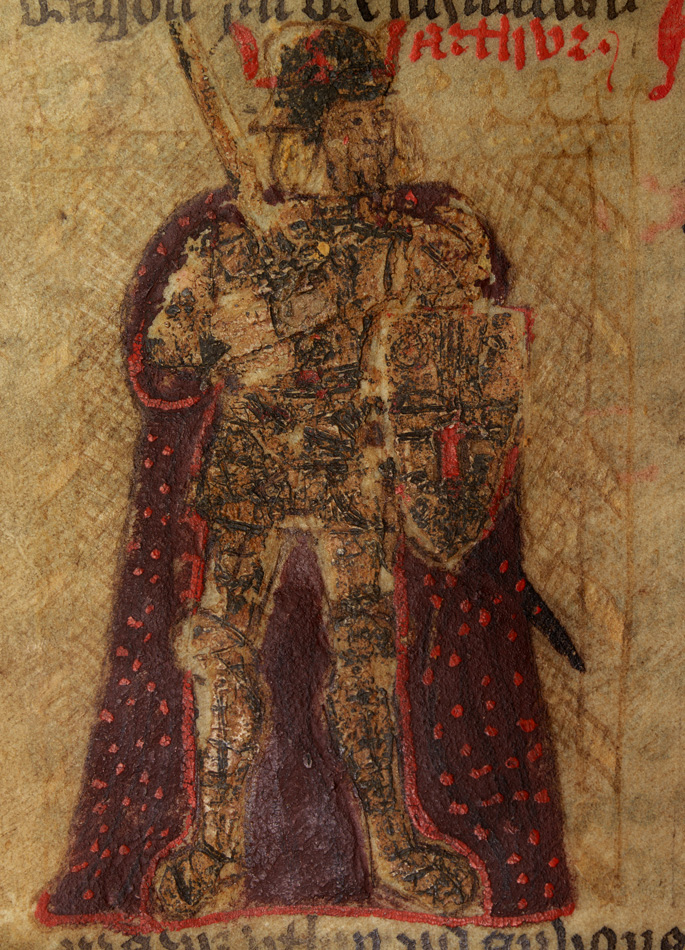
Geoffrey of Monmouth's Historia Regum Britanniae (History of the Kings of Britain) owes a lot to Nennius.
Despite commonly being known as Geoffrey of Monmouth nowadays, in life Geoffrey seems to have identified as "Galfridus Arturus" "Galfridus Monemutensis", based on how he signed his name in various charters from Oxford - often near Archdeacon of Oxford Walter's signature (which would line up with the close relationship Geoffrey claims they have in the Histroia). This isn't just me being pedantic but is actually important as unlike most of the sources (and like Gildas and Nennius) Geoffrey wrote exclusively in Latin rather than Welsh. In fact, we have no texts by him in Welsh and we have no evidence he spoke or read it at alloutside of his own claims of translating a Welsh text into the Historia as we know it today. When we consider how it conflicts with much of the Welsh material (Arthur ruling from Caerleon rather than Cellliwig, the deatails of the succesion of King Beli Mawr (meaning the great) and Geoffrey's King Weli, the Brutus legend only being found in Welsh texts like Nennius) and most importantly, his misunderstanding of Pendragon as meaning "Head of the Dragon" rather than "leader of warriors", it may be possible he did not know Welsh at all. Some, like the translator the Penguin Classics edition I have read, think he might have even been Breton. While he seems familiar with Caerleon, we actually have no evidence he ever went to Monmouth, yet alone was born there.
Little is known of Geoffrey the man by modern standards, as can be seen from the dispute as to whether a man called Geoffrey of Monmouth had even been to Monmouth, compared to the anonymous authors of the Welsh material, we actually have a great deal to work with. (description of Geoffrey)
Despite being labeled a "history", the Historia is pretty pathetic and obviously fictional by modern standards, not that would shock anyone with all the dragons and giants and claims the British are Torjans and the Scottish are of mixed Irish-Scythian descent. It is more of both Geoffrey's attempt to write a work of fiction using Welsh mythology and also an attempt to weaponise it as propaganda. Despite what might be assumed by a man with "of Monmouth" in the title and seemingly using largely welsh sources; the book takes a swerve in the final few pages into anti-Welsh, pro-Britanny propaganda, with the Welsh depicted as the dregs of the Britons who were ravaged by plague as all the Britons of any worth either died or fled to Britanny. It is even claimed the name "Welsh" might stem from the Welsh being so barbarious. When this is combined with the (by modern standards) xenophobia shown towards the English and Scottish and the implicit claim all the cornish were wiped out in plague, Geoffrey seems to have written the book about an island whose people he seemed to think of as the degenerate descendants of better men at best.
I should note, that my edition of Wace's Brut (an adaptation of Geoffrey for Norman audiences) claims that neither Geoffrey or Wace were anti-Welsh, but the text itself is difficult to read any other way. If you want to get more into analysis as to whether or not Geoffrey seems to have been anti-Welsh, please look elsewhere because I am not a professional in this field.
It must also be noted that Geoffrey, in dealing with Welsh mythology, was dealing with material that often contradicted itself. While his complete lack of allusion to any of the Mabinogi stories is interesting - Beli Mawr, who never seems to have done anything to earn him the title, appears as King Weli in the Historia. Interestingly, in the Second Branch, Beli seems to have been succeeded as King of Britain (or, as it calls the island: "The Island of the Mighty") by his grandson Bendigeidfran, and Beli's son Caswalon only ascends to the throne after overthrowing Bendigeidfran's son by force. Caswalon is based off the real historical figure Cassivellaunus, a King of a tribe fought by Julius Caesar, which might suggest the story takes place shortly before Caesar's visit to Britain. The problem with this time period would be that all but five women in Ireland die by the end of the story, and the idea that Ireland could recover from genocide shortly before 55 BC in time to have a decent population by the time the Romans first wrote of them in around 100 AD. In the story the Dream of Emperor Maxen, Beli is presented as still ruling the island of Britain at the time of Maxen (the Roman usurper Maximus) - so at some point between 383 and 388 AD - these are two very different dates, and the latter story presents Maxen as being the first Roman to have ever heard of Britain, let alone to have conquered it, erasing Julius Caesar's conquests entirely. In the story of Ludd and Llefelys, Beli is succeeded by his son Lludd, who calls on his brother Llefelys (the king of france) to deal with three magical threats to Britain. Caswalon does not show up in the actual events, only being named dropped alongside a fourth (third in the order given in the text) brother named Nynyaw. The last story here was originally attached to Welsh translations of the Historia, but may predate it and was added in to fill a gap left by Geoffrey in him not including it. As it is attahced to Geoffrey it generally agrees with him in how Caswalon does not overthrow and kill anyone and neither does he fight emperor Maximus.
Explain how Geoffrey had to make sense of a set of legends that often contradict each other - give the example of the succession of Beli in The Four Branches, the story of Maxen and the story of Ludd.
Come back later
(Read Historia Regum Britanniae here, or at Penguin classics)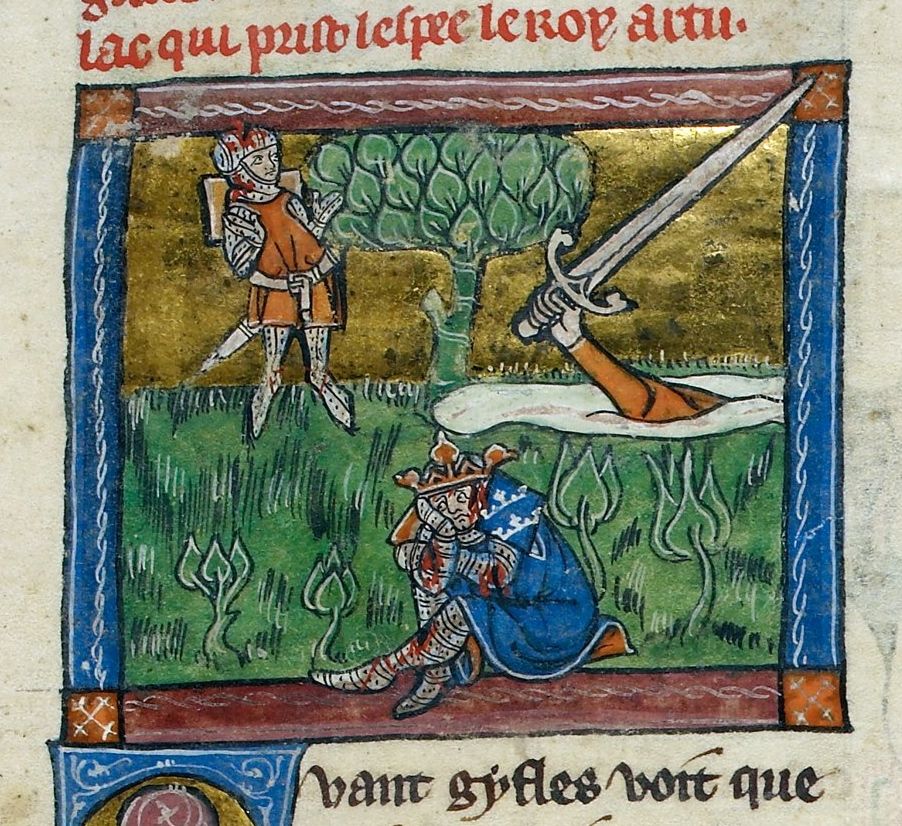
Many nations would make their own Arthurian romances, most famously (other than the French) the German Parzival, which was the basis for two operas by Richard Wagner, meaning you can play Six Degrees of Kevin Bacon but with King Arthur and "Here Comes the Bride".
Come back later
The Knight of the Cart shows Chierten was familiar with some pre-existing Arthurian material, as the story is his own take on the abduction of Gwenhwyfar, just with Lancelot rather than Cai or Gildas as the saviour.
These stories eventually made there way back into Wales in the Three Welsh Romances found in the Mabinogion.
Following the various romances, the french would get to work on trying to collate texts together to create a sort of complete narrative of the life of King Arthur - the massive, sprawling and massively expensive to read in translation (unless you want to look elsewhere) Lancelot-Grail (Vulgate) and Post-Vulgate Cycles.
Despite what the name might imply, Lancelot-Grail does not start with Lancelot and end with the Holy Grail, it actually begins with the Holy Grail and ends with the death of Arthur.
Five texts make up the Lancelot-Grail:
Meanwhile, the Post-Vulgate begins with the same first two volumes before differing with the replacement for Lancelot of the Lake, the Merlin Continuation, and following it the texts differ from the Lancelot-Grail equivelents in terms of content. All together, it consits of the following five texts:
Bolded texts are the same as their Vulgate/Lancelot-Grail equivilents
Description of texts
We've certainly come a long way from post-Roman Britain, eh?
The only english edition of these two insanely long cycles (grouped together in the translation) is insanely expensive, being an acedemic rather than commerical translation - edited by Norris J. Lacy, the series costs around £300 and is apparently unavailable outside of the UK, meaning you will have to spend even more importing it if you live in any other english speaking nation. I have not found any second-hand collections for less than £245 and sales on amazon have only made it go as low as £241.09 as far as I'm aware. And this is the affordable, paperback editions - look at the five volume hardback editions and see them going for over £100 a book. (Ironically, it is these more expensive editions I have gotten my hands on some electronic editions through... other means).
Penguin has made a translation of one of the two versions of both Quest for the Holy Grail and the Death of Arthur (no idea if Lancelot-Grail or Post-Vulgate), although the Quest seems to be out of print here in the UK.
If you really, really, really want to buy a physical edition of these texts, the best deal you can get is on amazon (check your country's version of this listing to see if it is available for importing) here when it is on-sale. Volumes 1 and 2 of the five volume edition are on the internet archive. Other than that, you will have to look around yourself.
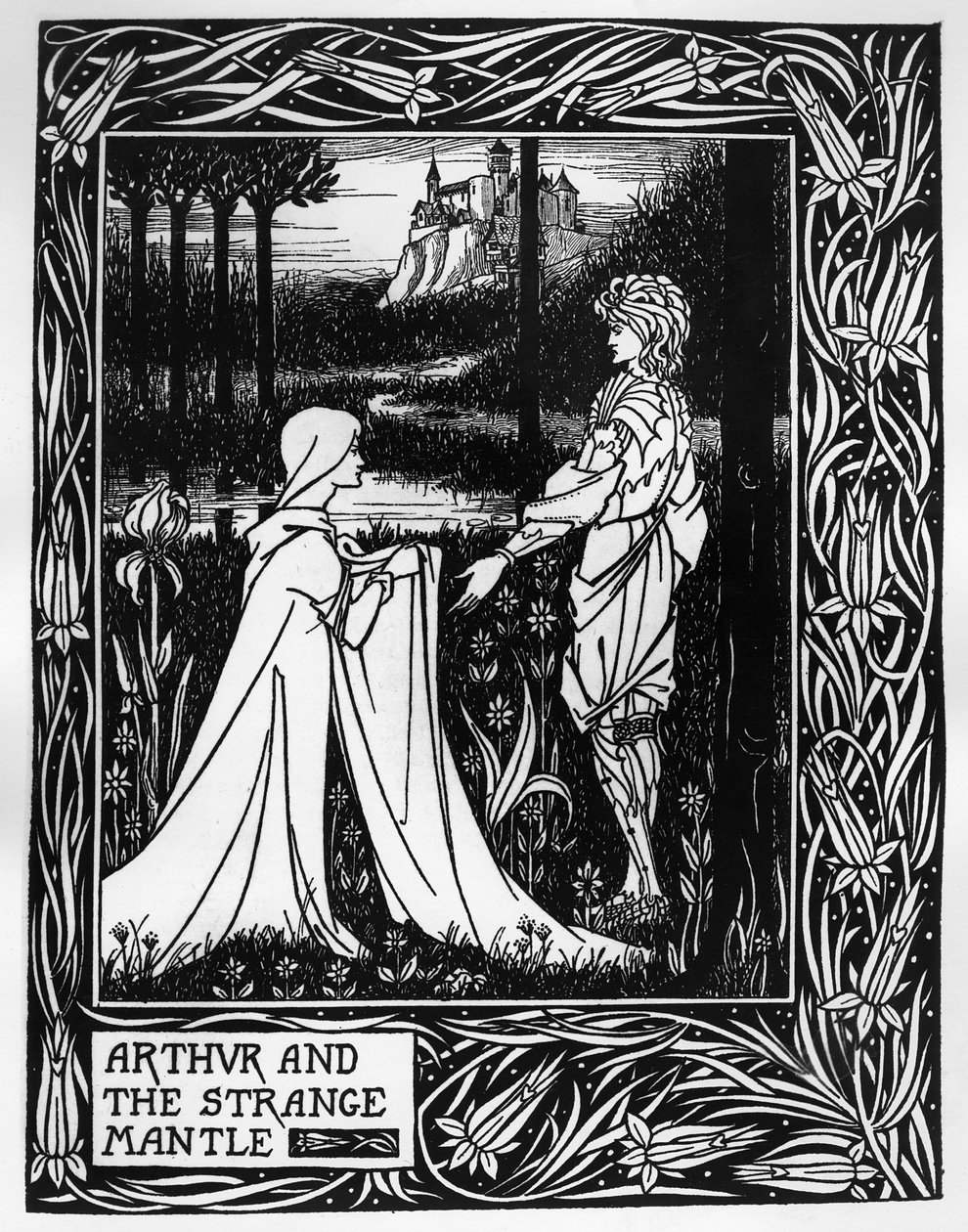
Written by Sir Thomas Malory in prison around the Wars of the Roses (anywhere from 1455-1487), Le Morte D'Arthur is probably the single most famous English language version of Arthuriana. While written in "english", this is specifically middle english, so some of the words have slightly different pronounciatations or meanings so sometimes the text can be somewhat strange to read, just different enough from modern english to be noticeable but not enough to make the text unreadible (as in Beowulf or other Old English texts). Even compared to other middle english works like The Canterbury Tales, Le Morte is a somewhat easy read.
Befor getting into what Le Morte is, it is important to note there are two main versions of the text - the Caxton edition printed in 1485 which was based on but changed from the Winchester Manuscript that Malory likely dictated himself. Only the printed Caxton version was known for centuries until the discovery of the Winchester manuscript in 1934. This means that there is somewhat of a conundrum about which version should be treated as the "proper" Le Morte; the printed version is the one known for hundreds of years, the one that all the books, movies and musicals would have had as a reference, whilst the Winchester manuscript is the original but was unknown until 1934 and therefore not in the general Arthurian "conversation". Which one you want to read is ultimately up to you as the two editions are still two editions of the same text.
However, I will add that most versions printed are, as far as I know, based off the Caxton edition, which is shorter and somewhat recognised from the original by Malory. Of editions that are definitely based on Malory's edition, I know only two. The Oxford edition is abridged, defeating the entire point of buying the original edition, and the other is P.J.C. Field's edition. Annoyingly, sites like gutenburg only seem to have the Caxton edition and sites like the internet archive only have a fascimile of the manuscript itself, with Malory's difficult to read handwriting, and seems to have many pages that are not scanned properly, being completely white. For the best free version of the Winchester manuscript then see: here, but note the site istelf is difficult to navigate. The internet archive does have a good version of the original Caxton edition though: https://archive.org/details/lemortedarthuror00malouoft.
Malory himself is suprisingly hard to identify as we do not only have a name but know he was Sir Thomas Malory, that is to say he was a knight. He also mentions being imprisoned in the text itself, regularly begging Jesus to save him. As there were multiple people with the name Thomas Malory who were knights and were imprisoned who lived at some point during the Wars of the Roses, suprisingly enough. The most common "suspect" for the Thomas Malory of Arthurian fame is one Thomas Malory of Newbold Revel, who seems to have been imprisoned not because of the war itself but due to being a criminal plain and simple - this Malory stole from, killed and raped innocent people.
If this is indeed the Malory who wrote Le Morte, then Malory's regrets for his life seem to have been incorporated into the work, for example in:
While whether or not Malory's charge of rape is the same as modern understandings of the word (as some consensual acts of sex where counted as rape) is disputed, it seems clear that Malory (again, if this indeed "our Malory") certainly killed and robbed.
But, as said, there are other Sir Thomas Malorys who were imprisoned at some point during the Wars of the Roses, so if this is even the right man is debatable.
Come back later
For the sake of brevity I am ending my more detailed history of King Arthur with Malory, as the Oxford Guide to Arthurian Literature & Legend moves on from the history of the legend to the history of particular characters in it following their discussion of Le Morte and its influence. Everything else wil be smushed together into the category of "modern" texts.
Exactly what should be considered a "modern" text is going to be a topic of debate, but for the sake of having a clear dividing line, I am going to end with Malory.
I am aware this groups Elizabethan poetry like The Faerie Queene with 1990s historical novels like The Winter King, but what can you do? Many of these people use Malory as the main or only source anyway.
Generally speaking you can put modern Arthurian fiction into a spectrum with two extremes on each end: On one end, you have The Once and Future King, completely detached from sixth century Britain and often anchronistically involved in references to commentary on the then contemporary 1930s-1950s society it was written in. On the other, Sword at Sunset, a part of a wider series of historical novels interested in one family's involvement in British history from the Roman occupation into Norman England - so focused on seeming historically plausibl that mainstays like Lancelot are thrown aside with the fairies, knights and castles.
If you think all this was long, just be glad I did not get into Tristan or the other Mabinogion stories.